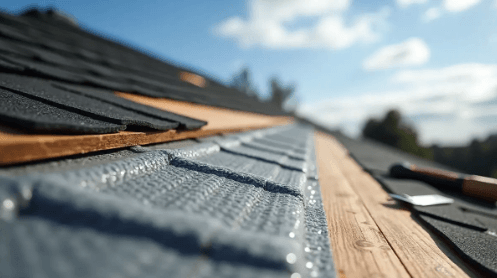
A roof can look fine from the yard and still be letting moisture move where it should never go. That is often what makes underlayment trouble so expensive. Homeowners usually notice the outer surface first, but the layer beneath it has a major job. When that hidden layer is torn, worn out, or saturated, the roof has far less protection against water that slips past shingles or flashing. That is why roof repair brigham city should not be treated as a surface issue alone.
Underlayment works as the backup barrier between the roof covering and the deck below. It helps block moisture when wind-driven rain, melting snow, or ice pushes water past the outer roofing materials. Once it starts to fail, the rest of the system loses an important layer of defense. What begins as a hidden weakness can spread into the decking, insulation, attic air quality, and even the ceilings inside the house.
Underlayment Problems Rarely Stay in One Spot
Many homeowners see a small leak and assume the fix will be simple. The trouble is, roof leaks do not always stay close to where they start. Water can seep in at one point, then travel across the decking or along the framing before leaving any sign inside. When a stain finally appears on the ceiling, the moisture may already have reached a much larger area.
That is what makes damaged underlayment so easy to miss. The roof can still look fairly normal from the yard, aside from a few worn spots or a shingle edge that does not sit quite right. Meanwhile, water may be getting below the surface each time it rains or snow begins to melt. That slow, repeated moisture is what causes the real trouble, because it gives the wood underneath time to weaken before the problem becomes obvious.
The Roof Deck Often Pays the Price First
When water gets past the roofing surface and reaches damaged underlayment, the deck is usually next in line. Wood does not have to be soaked all at once to start deteriorating. Repeated dampness is enough. Over time, the deck can soften, swell, or begin to rot. Once that happens, fasteners may not hold as firmly, and the roofing materials above can start shifting out of place.
This is where a repair can expand quickly. A homeowner may think the problem is limited to replacing a few shingles, only to find that the material beneath them has lost its strength. New roofing products cannot perform well on a weak base. If the decking has been compromised, the repair has to go deeper to be worth doing. Otherwise, the same section may fail again because the surface was fixed while the foundation was still vulnerable.
Moisture Spreads Beyond the Outer Roofing Materials
Moisture that gets past damaged underlayment rarely remains confined to a single layer of the roof. It can spread into the insulation, settle in the attic, and create problems that are easy to misread at first. Insulation that has absorbed moisture does not perform as well, so rooms may feel harder to heat or cool, even before anyone sees visible damage. In the attic, that kind of trapped dampness often shows up first as a lingering musty smell.
Inside the house, the warning signs can be subtle. A patch of paint may start to lift, a ceiling may pick up a light stain, or trim may look slightly off without drawing much attention. Sometimes homeowners repaint the area, only to see the discoloration return. When that happens, the stain is usually not the real problem. It is the sign of moisture that has been working its way through the roof system for a while.
Flashing and Underlayment Failures Often Work Together
Underlayment damage is not always the original problem. In many cases, it breaks down after another weak point lets water in. Flashing around vents, chimneys, skylights, and roof transitions is a common example. If those areas begin to separate or wear out, water can seep beneath the outer roofing layer and repeatedly reach the underlayment. Over time, that hidden layer starts to wrinkle, tear, or lose its ability to shed moisture.
That is why a good repair should not stop at the first visible symptom. A stain inside the house or a rough patch on the roof may be only part of the story. The real issue may involve how water is entering, where it is traveling, and how many layers have been affected along the way. Focusing on the full system leads to better repairs than treating each symptom in isolation.
Cold Weather Makes Hidden Damage Harder to Ignore
Freeze-and-thaw cycles can be especially hard on a roof with a vulnerable underlayment. When moisture gets into the system and temperatures drop, expansion can put more stress on surrounding materials. As that cycle repeats, shingles can loosen, flashing can shift, and the deck below can absorb even more moisture. A section that seemed manageable in one season can look very different after a period of harsher weather.
Ice-related moisture movement is another reason these problems spread. Water that backs up beneath the roof’s outer layer puts even more pressure on the underlayment. If that layer is already compromised, the roof has much less protection against deeper intrusion. At that point, the issue is no longer confined to one weak section. The entire surrounding area becomes more vulnerable.
See also: Essential Tips for Hiring a Trusted Acacia Gardens Removalist for Home or Office Moves
Early Attention Usually Keeps Repairs More Manageable
Homeowners tend to save money when they act before moisture has time to spread. A small area of underlayment damage is very different from a repair that includes rotted decking, wet insulation, and interior restoration. Waiting often adds more than roofing costs. It can also bring drywall work, paint repairs, and cleanup that could have been avoided with earlier action.
That is why roof repair brigham city should be approached with a wider view of the roof system. The underlayment may be out of sight, but it affects everything above and below it. When that layer fails, the roof has less room for error, and even minor water intrusion can cause greater damage. A thorough repair protects more than the surface. It helps preserve the structure beneath it and prevents one hidden problem from turning into several.